One of the most frustrating experiences in international sales leadership is watching a business take something that has worked exceptionally well in one market, replicate it almost perfectly somewhere else, and then wonder why the results are disappointing. I've seen it happen repeatedly over the years, particularly with US technology businesses expanding into Europe. They arrive with a successful product, an established sales process, detailed messaging, a clearly defined ideal customer profile and a playbook that has already delivered impressive results. There's every reason to believe that the same approach should work in a new market.
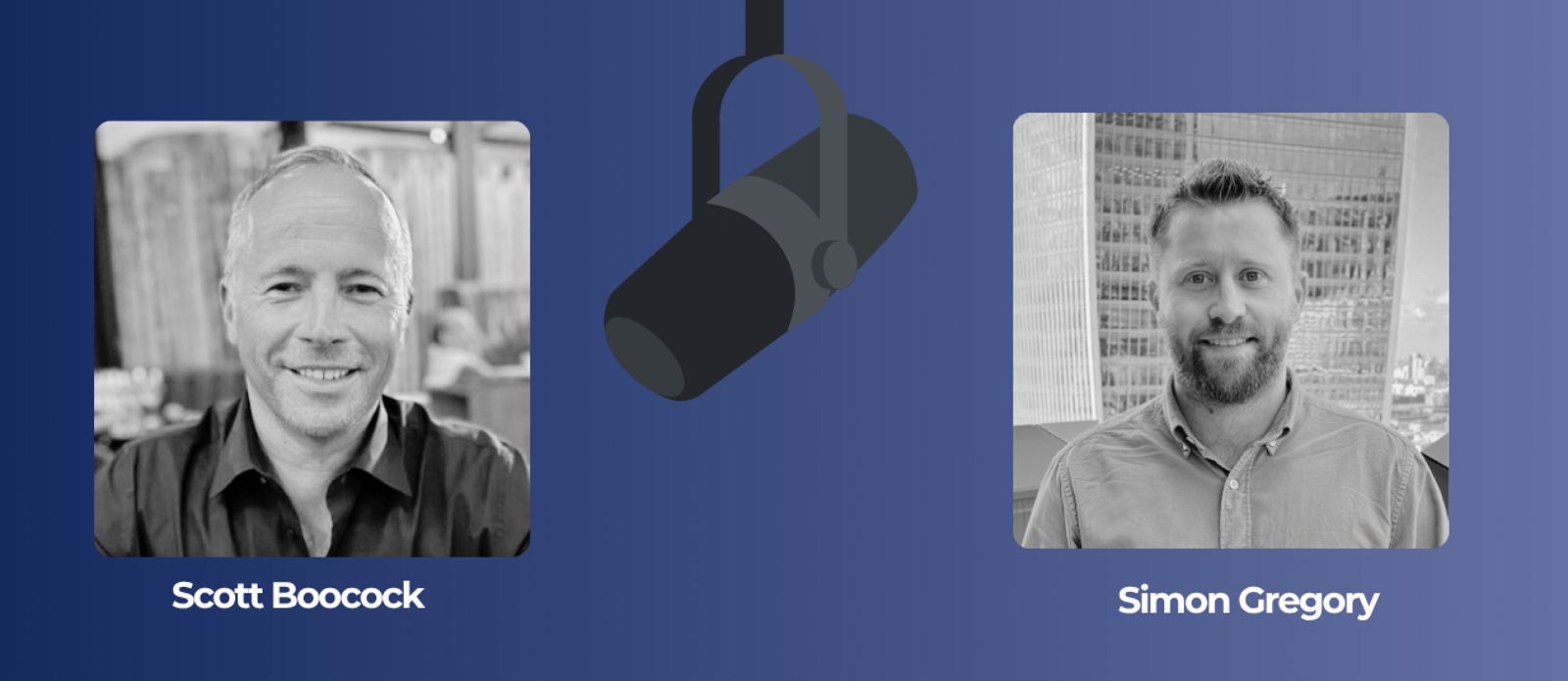
Except it often doesn't. The problem isn't necessarily the product, the quality of the salespeople or the size of the opportunity. More often, it's the assumption that the conditions responsible for success in one market will exist in another. I discussed this with Simon Gregory from Primis Talent during an episode of Cracking the EMEA Revenue Code. We covered everything from navigating the German market to building successful sales teams in France, and why understanding local buying behaviour is every bit as important as having a strong commercial strategy.
Looking back at those experiences, there are several lessons that I think apply just as much to a founder-led SaaS business looking for its next stage of growth as they do to a multinational organisation entering a new region.
YouTube is off until you allow it.
Watch Directly on YouTube (opens in a new tab)Prefer to listen? Listen on Spotify (opens in a new tab)
Watch the full conversation with Simon Gregory from Primis Talent.
A Proven Playbook Is a Starting Point, Not a Guarantee
When a business has invested time and money building an effective sales process, it's understandable that leadership wants to protect it. There will be a defined approach to qualification, messaging, discovery, demonstrations, forecasting and deal progression. Sales leaders will have developed an understanding of what good performance looks like, and there will probably be evidence showing that the approach works. All of that is valuable. The mistake is assuming that consistency means everyone must do exactly the same thing in every market.
I've spent a significant amount of time working with US businesses expanding into EMEA, and this has probably been one of the most common sources of disagreement between regional sales leadership and the global executive team. Even apparently minor details can affect how a business is perceived. The language used in marketing materials, the commercial model, pricing assumptions and the way customers expect to engage with a supplier can all be different.
Something that looks perfectly reasonable in an American sales presentation may feel foreign or poorly considered to a European buyer. A pricing model that works because of relatively low operating costs in one market may become unattractive when those costs are significantly higher elsewhere. Then there are the more substantial differences, including regulation, contractual requirements, procurement processes and data protection. My approach has always been to maintain a consistent commercial framework while giving local teams enough freedom to adapt how they execute it.
That doesn't mean abandoning discipline. It means allowing the people closest to the market to contribute to the strategy, testing their recommendations and using evidence to decide what works. A successful playbook should be something the organisation continues to learn from and improve, not a document that becomes immune to challenge.
Germany Taught Me That You Cannot Short-Circuit the Buying Process
Of all the European markets I've worked in, Germany has probably taught me the most difficult lessons. It's a significant and commercially attractive market, but I've found that complex enterprise sales can require a very different approach from the UK. In my experience, German enterprise buyers often place considerable emphasis on consensus, risk management, legal compliance and having the right stakeholders involved in a decision.
That changes how you need to sell. You can have an enthusiastic champion, a compelling business case and a product that solves a genuine problem. But if procurement, legal, information security or another influential stakeholder hasn't been properly engaged, the opportunity can stall. I learned that getting those people involved early is much more effective than waiting until everyone believes the deal is ready to close.
It also reinforced the value of local representation and partnerships. Early in my experience of the market, I invested heavily in localising our materials and employed German-speaking salespeople who weren't necessarily based in Germany. Looking back, that wasn't enough. Local knowledge isn't simply about speaking the language. It's about understanding how businesses operate, how relationships are established and how decisions are made. Strong local partners and people with established relationships can be enormously valuable.
The wider lesson is that a healthy pipeline doesn't necessarily translate into a healthy forecast. You need to understand how decisions actually get made and whether your sales process reflects that reality.
Sometimes the Best Decision Is to Stop Pushing
One of the hardest decisions for a sales leader is deciding when to invest more heavily in a market and when to change course. There's an understandable tendency to keep pushing when you've already committed resources. You've recruited people, developed campaigns, generated opportunities and invested a considerable amount of leadership time. But activity shouldn't be confused with progress. When I assess whether a market deserves further investment, I'm interested in the quality of the pipeline being created, how opportunities are progressing and whether we're seeing evidence of genuine customer demand.
Are prospects responding to the proposition? Are we reaching the right decision-makers? Are opportunities converting through the sales process? Can we see the beginnings of a customer base that will support further growth? If those signals are positive, there's a reasonable argument for investing more. If they're consistently weak, simply increasing activity is unlikely to solve the underlying problem. I've withdrawn resources from markets when the approach wasn't working, but I don't view that as giving up. It's an opportunity to reassess the proposition, involve the wider commercial team and understand what needs to change.
Sometimes the answer is different messaging. Sometimes it's a revised commercial model or a change in the target customer. On other occasions, the better approach is to develop local partnerships before investing in direct salespeople. One useful lesson from my time at Treasure Data was how relationships with successful partners in established markets could help us enter new ones. A partner that already understands your technology and has delivered successful customer engagements can provide introductions, credibility and local knowledge that would otherwise take considerable time to develop.
For growing businesses, this is particularly important. Capital and leadership attention are finite. Knowing where not to invest can be just as valuable as identifying the next growth opportunity.
Your Best Sales Team Might Not Follow Your Playbook
One of the most memorable experiences of my career was leading a French sales team at Treasure Data. When I took responsibility for the team, we didn't immediately see eye to eye. They had their own way of working, were less enthusiastic about some of the sales management processes I wanted to introduce and placed considerable emphasis on building customer relationships. From my perspective, some of their requests seemed excessive. There were discussions about entertaining customers, attending sporting events and investing in experiences that didn't fit neatly into the approach I was used to.
It would have been easy to insist that everyone adopt the same operating model. Fortunately, I came to understand that these people were exceptionally good at what they did. They had strong relationships, understood their customers and were comfortable engaging at senior executive level. What initially looked like a lack of process discipline was, in part, a different approach to achieving the same commercial objective.
Once we'd established trust and agreed on the outcomes that mattered, I gave them more freedom to operate in ways that suited their market. They became my most successful team. That experience reinforced something I now consider fundamental to effective sales leadership. The job isn't to make every salesperson behave identically. It's to create an environment in which talented people can succeed while maintaining the standards, accountability and commercial visibility the business needs.
You still need accurate forecasting, meaningful pipeline reviews and a clear qualification process. But those things should support good selling rather than constrain it.
Revenue Performance Is Everyone's Responsibility
Another subject Simon and I discussed was the relationship between sales, marketing and customer success. I've worked in organisations where those functions were operating to completely different definitions of success. Marketing would celebrate generating thousands of leads, while the sales team questioned whether those people represented genuine commercial opportunities. Sales would focus on closing contracts, while customer success sometimes discovered that expectations had been established without their involvement.
Each department could claim to be achieving its objectives, yet overall revenue performance remained disappointing. That's a problem. I've always believed there needs to be a shared commercial outcome that the entire revenue organisation understands and works towards. Individual teams still need operational measures. Marketing needs to understand campaign performance, sales needs visibility into pipeline and conversion, and customer success needs to measure retention and expansion.
But those measures should connect to a common commercial objective. If marketing generates twice as many leads but none of them convert, what has the business actually achieved? If sales closes a contract that the delivery team cannot support successfully, is that really a good commercial outcome? For me, the answer is to create an operating rhythm that encourages the departments to work together. That means regular conversations between functional leaders, reviewing the quality of opportunities rather than simply their quantity, and ensuring that customer expectations are understood throughout the lifecycle.
It's rarely easy. Different functions naturally approach problems from different perspectives. But commercial performance improves when those differences are addressed openly rather than allowed to become departmental barriers.
Culture Is a Commercial Advantage
I spent an important part of my career at Bigmouthmedia, joining when the business was still very small and experiencing its growth into a major European agency. What made that experience memorable wasn't simply the commercial success. It was the culture. There was a shared belief in what the business was trying to achieve, a genuine sense of belonging and an environment where people felt their contribution mattered.
The leadership team understood that the way employees treated one another would ultimately influence the way customers experienced the business. That wasn't a soft management consideration. It was commercially important. I remember customers commenting on the energy within the organisation and the consistency of their interactions with people across different departments. The company was operating in a competitive market, offering services that other agencies could also provide. But the experience of working with the business helped differentiate it.
I've carried that lesson throughout my career. Sales leaders don't generate consistent performance simply by demanding higher activity, setting more ambitious targets or introducing tighter reporting. They create the conditions in which people can perform. That involves clear expectations, good coaching, accountability, recognition and the confidence to challenge decisions without fear of being dismissed. It also means understanding that the people in your team are individuals. They have different motivations, strengths and circumstances.
A healthy culture doesn't remove the need for high standards. It makes those standards easier to sustain.
The Real Lesson for Growing Businesses
Although much of my experience has involved international sales organisations, I think the underlying lessons are relevant to businesses at almost any stage of growth. A founder who has successfully sold the first version of a product may discover that the same approach becomes less effective when they recruit their first salespeople. A sales team that has performed well with a handful of customers may struggle when the business moves into a different market segment.
A company that has generated consistent inbound demand may find that its existing sales process isn't suitable for proactive outbound selling. These aren't necessarily failures of the people involved. They may be signs that the business has outgrown parts of its commercial operating model. The solution isn't always another salesperson, a new technology platform or a more aggressive sales target. Sometimes it's about understanding what's really happening, identifying which assumptions no longer hold and making practical changes to the way the business sells.
After more than 25 years working in sales, that's one of the lessons I keep returning to. The best sales strategies are structured enough to create consistency, but flexible enough to evolve as the business learns. And ultimately, that's what effective sales leadership should deliver.
About the Interview
This article draws on my conversation with Simon Gregory of Primis Talent for the Primis Presents podcast, Cracking the EMEA Revenue Code, originally published on 13 January 2026. The interview covers building international sales teams, regional go-to-market strategies, complex enterprise deals, recruitment, commercial alignment and leadership culture. Watch the full conversation using the video player above or listen on Spotify.